An interconnected world, stupidly divided
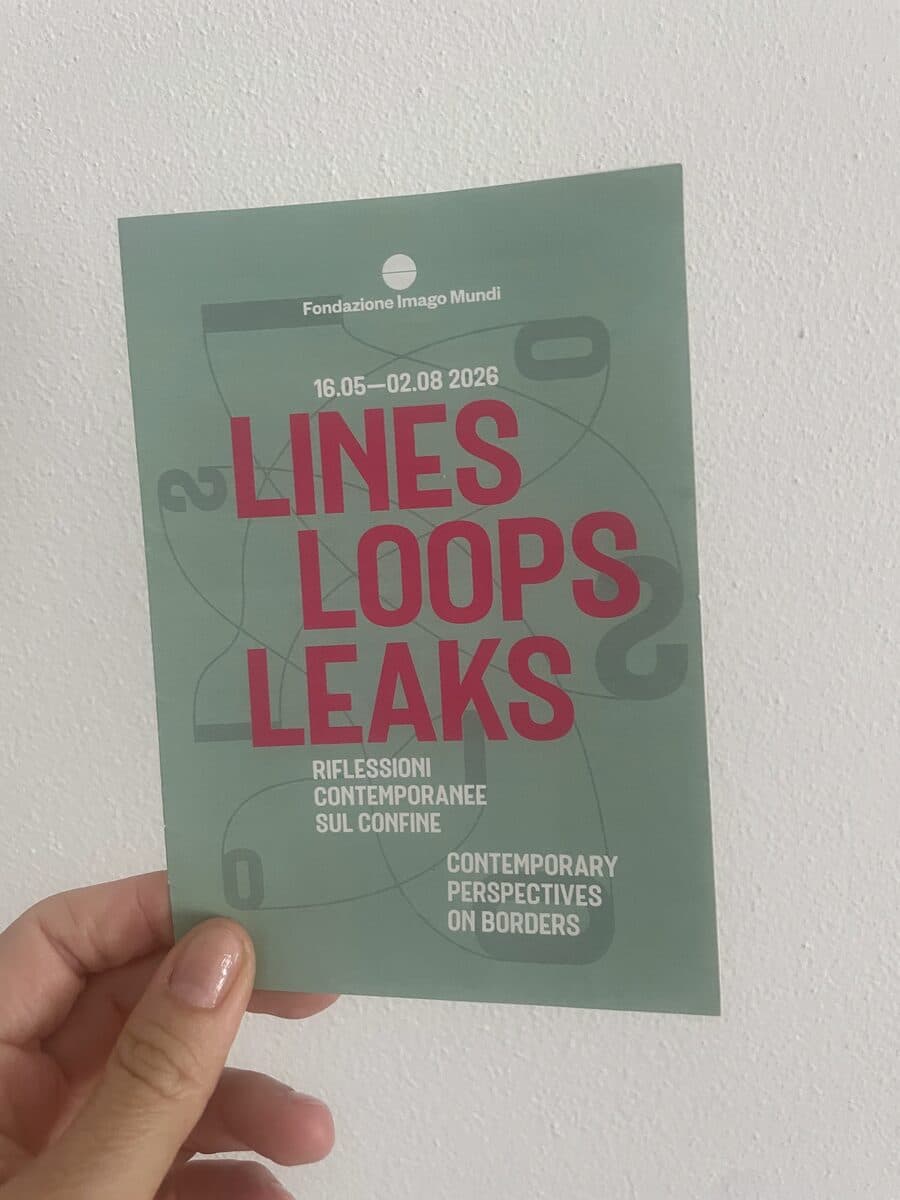
Until Sunday 2 August, the Gallerie delle Prigioni in Treviso are hosting an exhibition about borders: Lines, Loops, Leaks, curated by Mattia Solari for Fondazione Imago Mundi. I saw it a few days ago and came out with my head full. I am writing in a hurry, because there is little time left and it is worth the trip.
I have worked for years on access to higher education for refugee students, which means working with people who cross a border and then find it in front of them again afterwards, in other forms. I thought I already knew what I would see. Instead the exhibition made me rethink a few things.
Borders are man-made
Put like that it sounds obvious, but seeing it turned into images is another matter. The lines we take for natural are decisions made by someone, at a particular moment, often somewhere else and without asking anything of the people who lived there. A border does not describe the world: it manufactures it. It establishes hierarchies and produces identities.
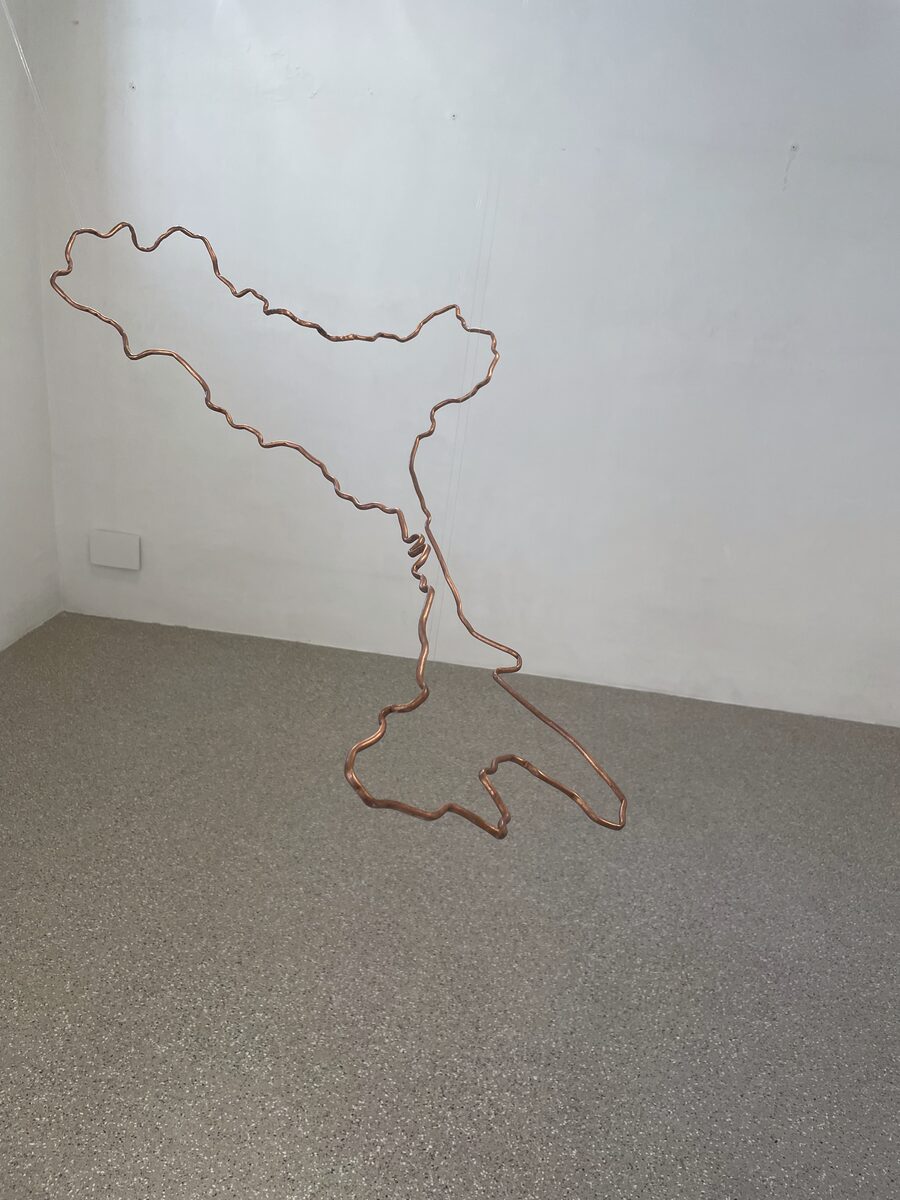
Shilpa Gupta, MapTracing #9 – IT. The outline of Italy reduced to a hand-bent copper wire: fragile, crooked, held together by nothing.
Walls and barbed wire
One section shows how geopolitical lines become matter, a mark on the landscape and on bodies. What struck me is the reading the exhibition offers: these barriers do not speak of the strength of states, but of their fragility. You build a wall when you no longer know what to say.
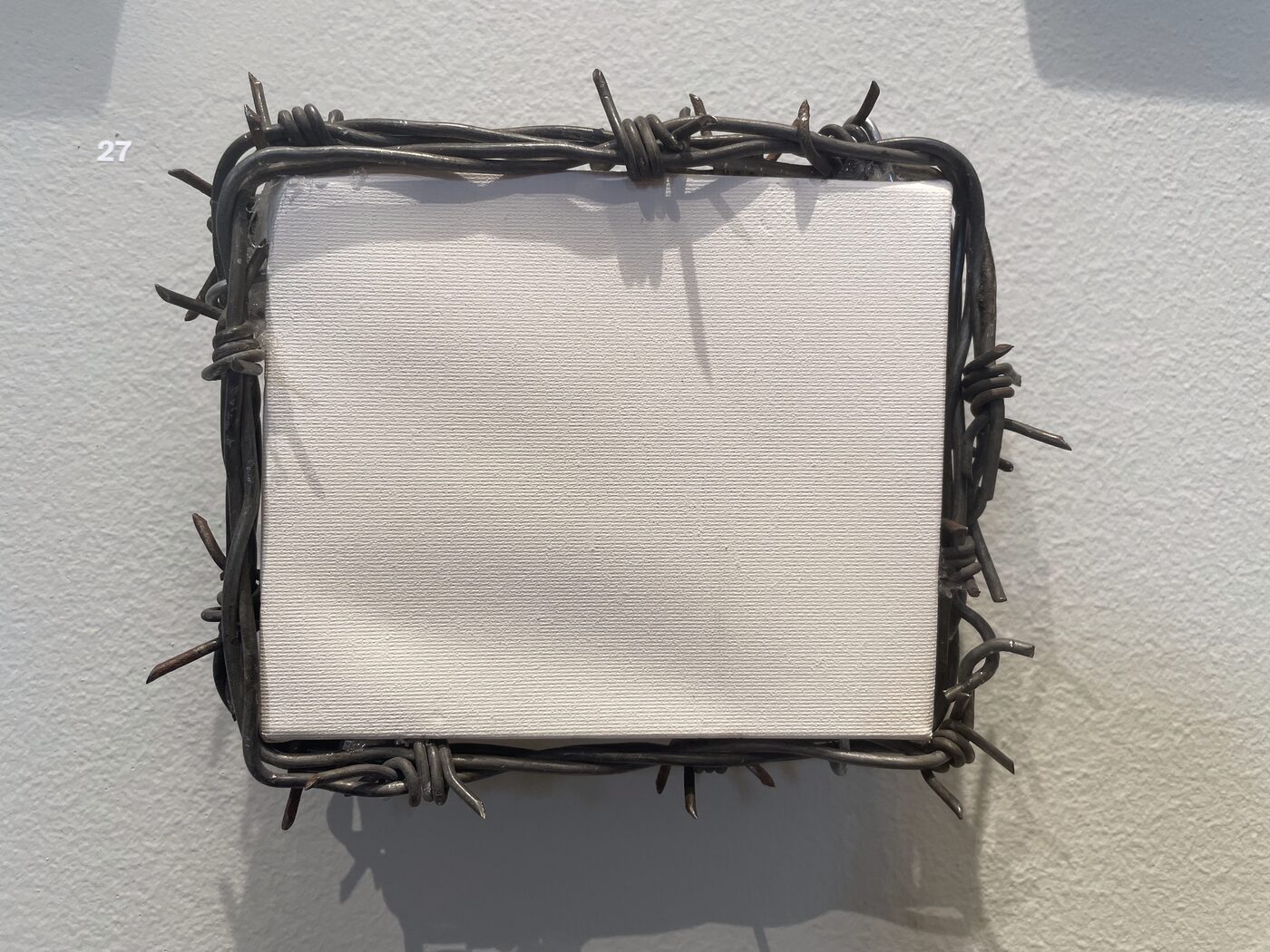
Vanley Burke, Protecting the white space. A blank canvas guarded by barbed wire: there is nothing to defend, and the defence is ferocious precisely for that reason.
Some borders are invisible, and they are built into the rules
These are the ones I deal with every day. A qualification that cannot be recognised because the original documents are missing. A residence permit that expires before the exam session. A scholarship that requires a residency status you cannot have. None of these borders has barbed wire, and yet they stop people just as effectively. They are written into regulations, and that is exactly why they pass for neutral. You need a lens to see them.
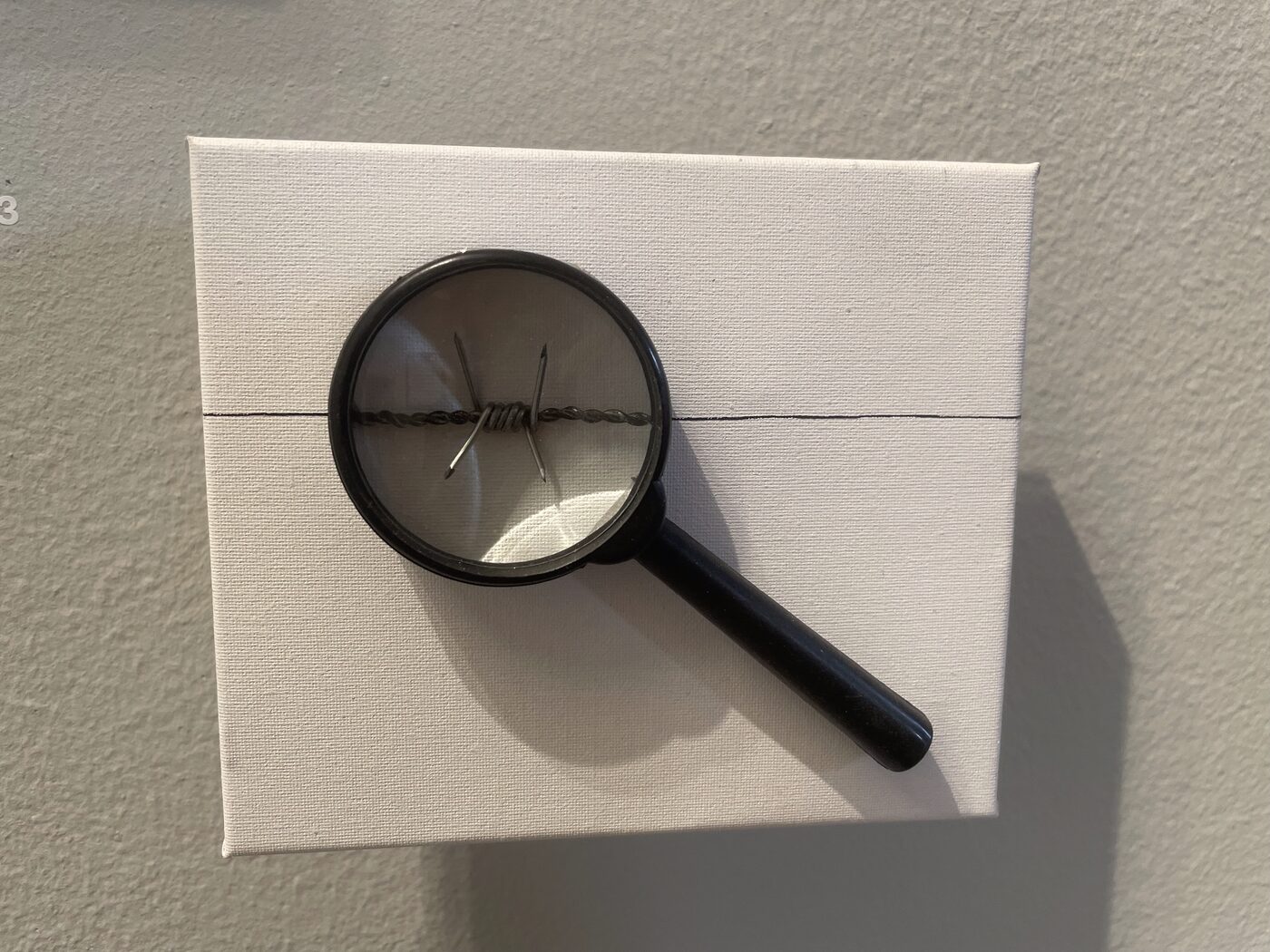
Kamil Saldun, Reality of lines. From a distance it is an ordinary line. Under the lens it turns into barbed wire.
One of the exhibition panels says that borders "reveal stories of conflict and agency that are often invisible". It is the word agency that stays with me. People who cross are not merely the object of policies: they choose, they find ways around, they insist, they build. Telling these lives only as vulnerability is already a form of border.
An interconnected world, stupidly divided
This is the summary of everything else. Goods, capital and data cross borders without friction. People do not. That asymmetry is not an accident, it is the design.
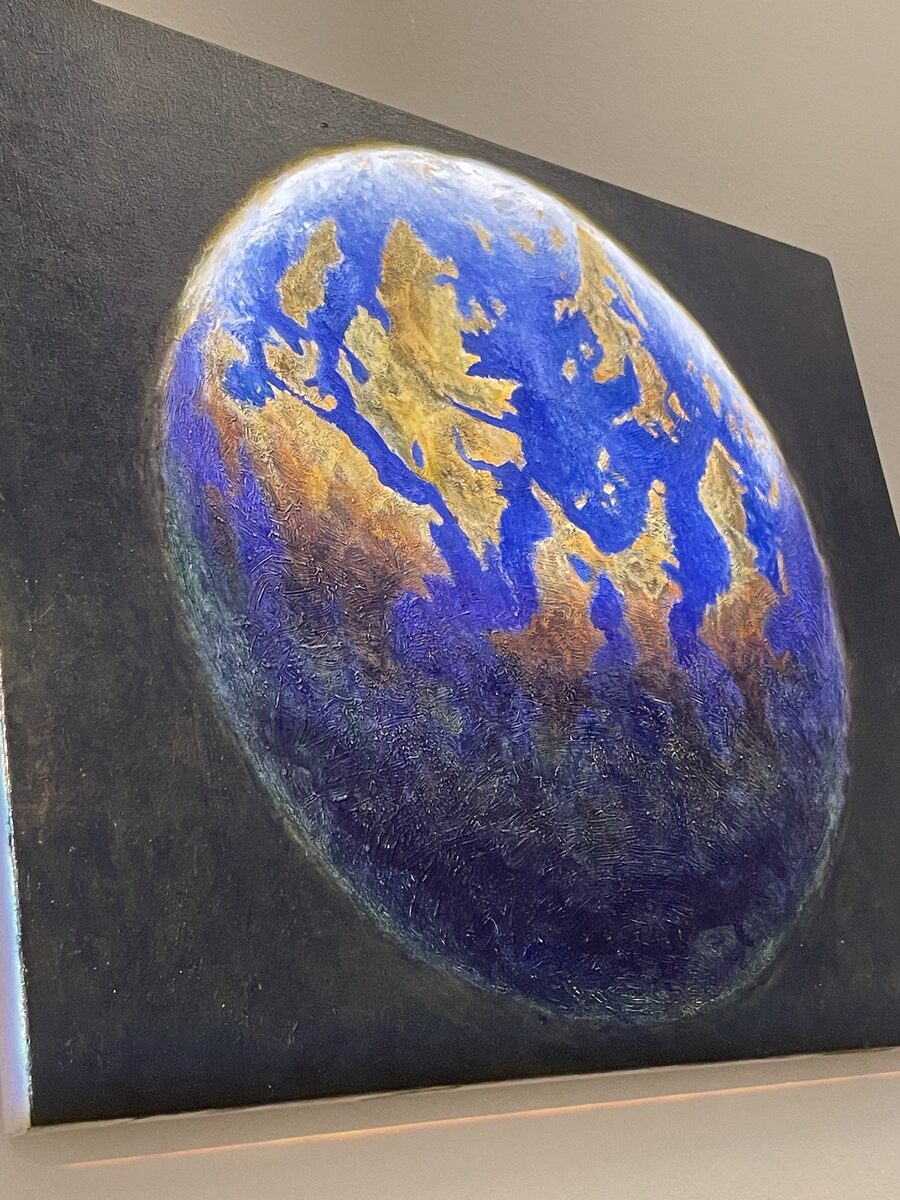
Riccardo Vicentini, Paesaggio terrestre. Seen from far enough away, there are no lines at all.
The border as a place of becoming
And yet the exhibition does not stop at denunciation. The proposal, written on one of the walls, is to "rethink borders as a creative resource for facing sociocultural transformations": not a line to defend, but a place of becoming. That is the part that left me most hopeful, and also the most useful to my work. University corridors, after all, are exactly this: a crack opened inside a system that declares itself impermeable, and that can in fact be rethought.
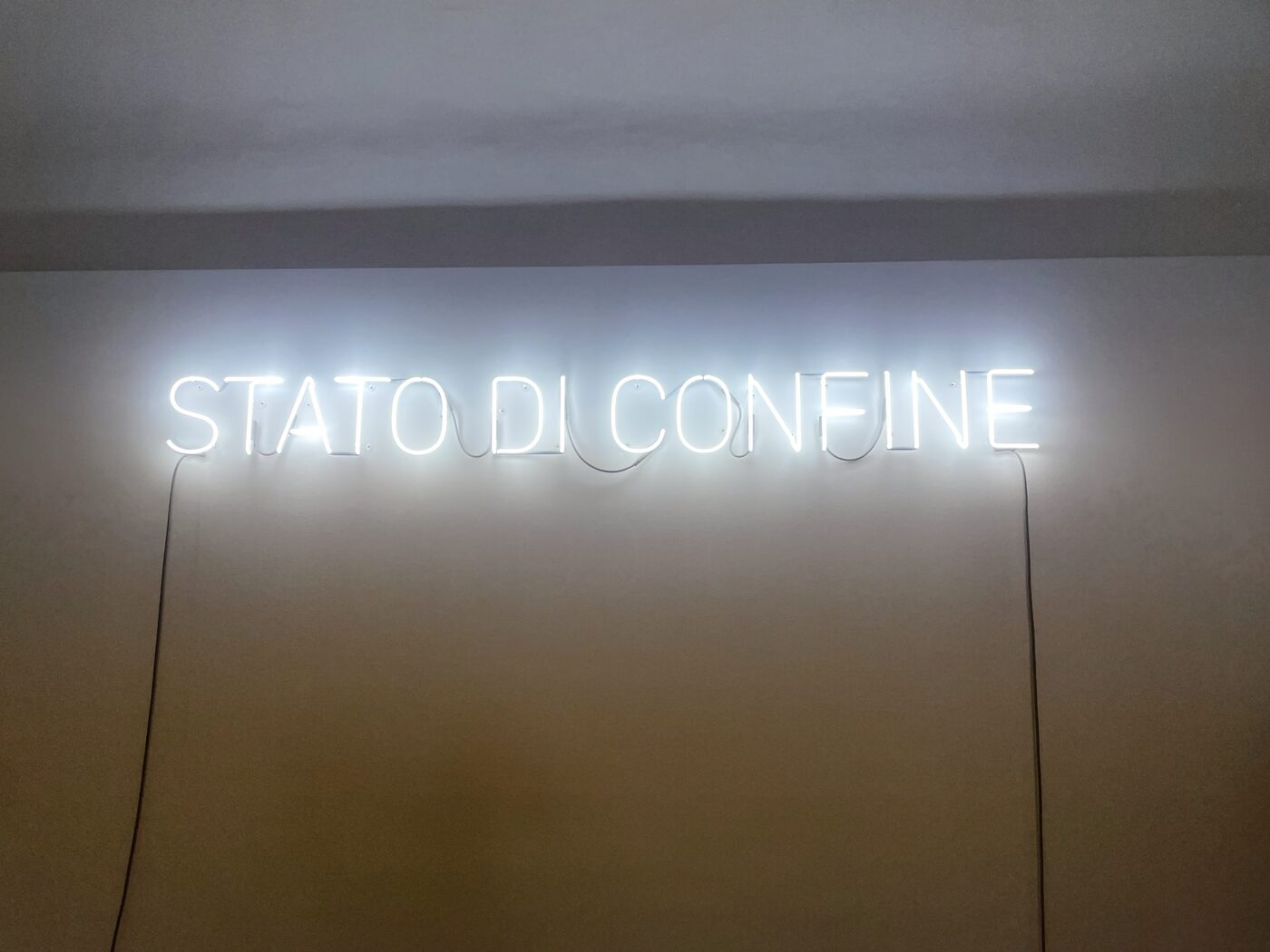
Matteo Attruia, Stato di confine. In Italian stato means both "state" and "condition": the ambiguity is the whole point.
There is time until Sunday 2 August. If you are anywhere near Treviso, go.
Lines, Loops, Leaks. Contemporary perspectives on borders. Gallerie delle Prigioni, Treviso, until 2 August 2026. Friday 16:00–19:00, Saturday and Sunday 10:30–12:30 and 15:00–19:00. Exhibition information
The photographs are mine, taken during the visit.